

Increased Sparkplug Maintenance Intervals
Can increased spark plug maintenance intervals put people out of work? We live in a changing world and sometimes we don’t realize what a big impact seemingly small changes have in our lives. When I got into the auto repair business there was plenty of work to go around. This has changed drastically over the last 2 decades. Maintenance intervals have increased and the car doesn’t need as much attention as it use to.
Today I’m going to talk about spark plug maintenance in particular but you could also add to the list of things that changed the automotive maintenance business, synthetic engine oil, extended life anti-freeze, new transmission technology requiring less fluid and filter changes and direct ignition systems that did away with the distributor cap and rotor.
But let’s talk about spark plugs. When you get right down to it a spark plug provides an electrical lightning bolt that ignites the air fuel mixture in the combustion chamber on command. Voltage surges supplied from the coil travel down spark plug wires to the correct plug. The voltage jumps across two specific points, being from the electrode to the ground strap.
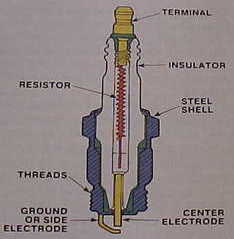
This miniature thunder and lightning system will still need maintenance over time but nothing like it use to be. In fact if you replace your vehicle every 3 to 5 years you might miss a scheduled spark plug maintenance altogether. So how can this be and what did they do to change the maintenance interval so drastically.
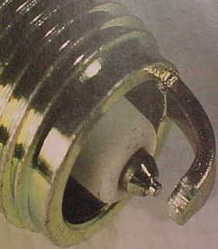
It all boils down to the materials that the electrode is made of. This has the largest overall effect on the longevity, power and efficiency of the plug. The construction and shape of the tip of the electrode are also important. The electrodes of the standard spark-plug that was common in the 80s were made with copper and nickel alloy.
They did a good job of conducting electricity and providing an excellent spark but they would wear down over time. This is where the idea came to use platinum electrodes on spark plugs as it did a good job of conducting electricity but lasted much longer. When platinum spark-plugs came on the scene they would last till about 5 years or 60,000 miles as compared to 35,000 miles of a standard copper nickel alloy electrode plug. When that happened we began to see customers less often at the shop.
But that wasn’t the end of it. Iridium spark plugs came on the scene and provided even longer electrode life then platinum tipped plugs. Iridium is a precious silver white metal and one of the densest materials found on Earth. It is common for these types of spark plugs to have maintenance requirements at 100,000 miles or 10 years whichever comes first.
Long-lasting Spark Plugs Mean People Need Me Less
There is no question that the car is a different animal than it was just a few years ago. Although I could cite many other examples the spark-plug maintenance interval makes my point. What made me write about this today? My ex-girlfriend stopped by and asked if her car needed a tune-up.
I looked in her owner’s manual and it said that her 2003 Toyota Corolla had iridium spark plugs installed and that maintenance was not required for 10 years 100,000 miles. A nice little side job went rolling down the street with the news. When I got into the auto repair business it was replacing spark plugs that kept a lot of shops going. The customer was conditioned to think that replacing the spark plugs better known as a tune-up could solve a lot of common problems.
Therefore when a driver took a vehicle in for service if the shop told them a tune-up was required, not only was it believable but it was probable. The recommended maintenance interval from the vehicle manufacturers back in the 80s was to replace them every 3 years or 35,000 miles now it’s 10 years 100,000 miles. In the long run this will most likely mean that less auto repair shops will be required going forward as maintenance intervals increase.
In my town alone, five auto repair shops have closed up in the last year. Two of them where major franchises that had strong advertising budgets. The world changes and so does the auto repair business and I guess there’s not much we can do about it. Want to put more mechanics out of work? Here is a video showing how to replace spark plugs yourself. Feel free to leave a comment at the bottom or you can return to the homepage from this next link to read more articles on the auto repair information blog.